Construction Site Vandalism: How to Deal With It and Prevent the Next One

If your construction site has been vandalized: make the site safe, photograph and document all damage before touching anything, file a police report, notify your builder's-risk insurer, then repair quickly. Visible damage invites repeat offenses. Then close the gap that let it happen: fencing, lighting, access control, and monitored surveillance.
If your site has just been vandalized, work in this order: make the area safe, photograph everything before you touch it, file a police report, notify your builder's-risk carrier, and repair the damage quickly. Visible damage that sits for days invites a second incident, because it signals that nobody is watching. Once the site is back in order, the question worth asking is not how to repair faster next time but why the site was reachable at all.
What to Do in the First 24 Hours After Construction Site Vandalism
1. Secure the area before anyone walks through it. Cut damaged power, isolate compromised equipment, and keep crews clear of broken glass, exposed wiring and anything structurally disturbed. A vandalized site is a safety incident before it is a security one.
2. Photograph and document everything before cleanup begins. Wide shots for context, close shots for detail, and timestamps on all of it. Log serial numbers of anything missing or damaged. Pull the surveillance footage covering the window and export it before it rolls off retention, which on many systems is thirty days or less.
3. File a police report. Do it even when the dollar figure looks too small to bother with, and even when recovery seems unlikely. Insurers generally require a report number, and repeat incidents at one address only become a pattern in the eyes of local law enforcement if each one was reported.
4. Notify your builder's-risk carrier. Policies carry notice deadlines, and a late report is a common reason a legitimate claim gets reduced. Have the photographs, the inventory and the police report number ready when you call.
5. Repair visibly and fast. Graffiti, cut fencing and smashed lights that stay in place for a week read as an open invitation. Fast repair is not cosmetic; it is the cheapest deterrent available to a site.
6. Find the gap that let it happen. Walk the perimeter at the hour the incident occurred, not at noon. Note where lighting stops, where the fence line is climbable, where a camera was pointed at nothing useful, and how long it took anyone to know something had happened. That walk is what turns one incident into a plan rather than a recurring cost.
A vandalized site costs more than the repair. It costs schedule, it raises the next insurance renewal, and it puts the project's reputation in front of a community and a client who were already watching. Protecting the site is cheaper than any one of those, which is why the response and the prevention plan belong together. When a construction site is tampered with, the surrounding community and your client can easily lose faith in your name and in the end result of your construction.
Guards vs. Remote Surveillance: Which Fits a Construction Site
Construction site security is a critical aspect of project management, especially given the high risk of theft and vandalism that can lead to significant financial losses and project delays. Companies can choose between traditional security guards and modern remote surveillance units for construction safety, each offering unique advantages and disadvantages.
Security guards provide a physical presence that can deter crime and enable quick responses to incidents. In contrast, remote surveillance units, such as solar-powered cameras and drones, offer 24/7 monitoring and can drastically reduce security costs while allowing for real-time oversight from remote locations.
Construction Site Security Guards
Pros:
- Physical presence deters potential criminals.
- Immediate response to security breaches or incidents.
- Ability to manage site access and verify IDs.
- Can patrol the site and monitor for suspicious activity.
Cons:
- Higher ongoing labor costs compared to surveillance systems.
- Limited coverage and visibility, especially during off-hours.
- Dependence on human vigilance, which may vary.
- Potential for fatigue or distraction affecting performance.
Construction Site Security Services with Remote Surveillance Units
Pros:
- Continuous monitoring 24/7 without the need for breaks.
- Significant cost reduction, saving up to 88% on security expenses.
- Ability to monitor the site remotely from any location.
- Advanced technology can provide analytics and alerts for suspicious activities.
Cons:
- Initial setup and equipment costs can be high.
- May not provide immediate intervention like a guard would.
- Requires reliable internet access for optimal functionality.
- Potential technical issues or malfunctions that could compromise security.
How LVT Overcomes Surveillance Unit Issues for a Construction Security Solution
LVT addresses the potential cons of remote surveillance units by offering advanced surveillance options that ensure reliability and comprehensive site coverage. Unlike traditional systems that may struggle with connectivity issues or power constraints, LVT's units are equipped with robust solar-powered technology and efficient battery backups, allowing for continuous operation regardless of environmental challenges.
LVT also has cutting-edge features such as real-time alerts, remote troubleshooting, and AI-driven analytics, which enhance monitoring capabilities and reduce the need for on-site personnel. This approach mitigates concerns about system downtime and maintenance and streamlines the user experience with intuitive interfaces and 24/7 monitoring support.
What Construction Sites Are Actually Targeted For
Construction sites are temporary, open to the air, and usually empty from dusk until morning. That combination attracts a fairly predictable set of incidents.
Copper and wire theft. Stripped from partially completed electrical runs and sold for scrap. The scrap value is trivial next to the rework.
Tools and small equipment. Portable, unmarked, easy to resell, and often uninsured below the deductible.
Heavy equipment. Loaders and skid steers taken from unfenced lots, frequently with a trailer, frequently on a weekend.
Fuel. Siphoned from parked machinery overnight, and rarely noticed until a crew cannot start the day.
Graffiti and structural vandalism. Broken windows, damaged finishes and cut fencing. Costly to undo, and a visible signal to the next person that the site is unwatched.
Arson. Rare, and the one that ends a project rather than delaying it.
Most of these happen in the same window, between the last crew leaving and the first crew arriving, which is what makes after-hours coverage the highest-leverage change on most sites.
Implications of Vandalism and Theft
Security is paramount on construction sites, because the equipment and materials on it are essential to the project at hand and expensive to replace. The direct cost is the equipment and materials you replace. The indirect costs are the ones that hurt: days lost while a crew waits on a reorder, penalties tied to a delivery date, a higher premium at renewal, and a client who now asks different questions at every site visit. These can include delays in the project, damage to the reputation of your company (especially within the community in which the site is located), increases in insurance premiums, and many more.
Assessing Your Site
Before you begin creating your site's security plan, it's vital to conduct an assessment of its needs. Carefully identify areas of vulnerability, past incidents, their causes, and changes that need to be made. Once you've given your site a comprehensive evaluation (looping in professionals where needed), it's time to create a plan to prevent crime on your construction site.
Preventing Crime on Your Construction Site
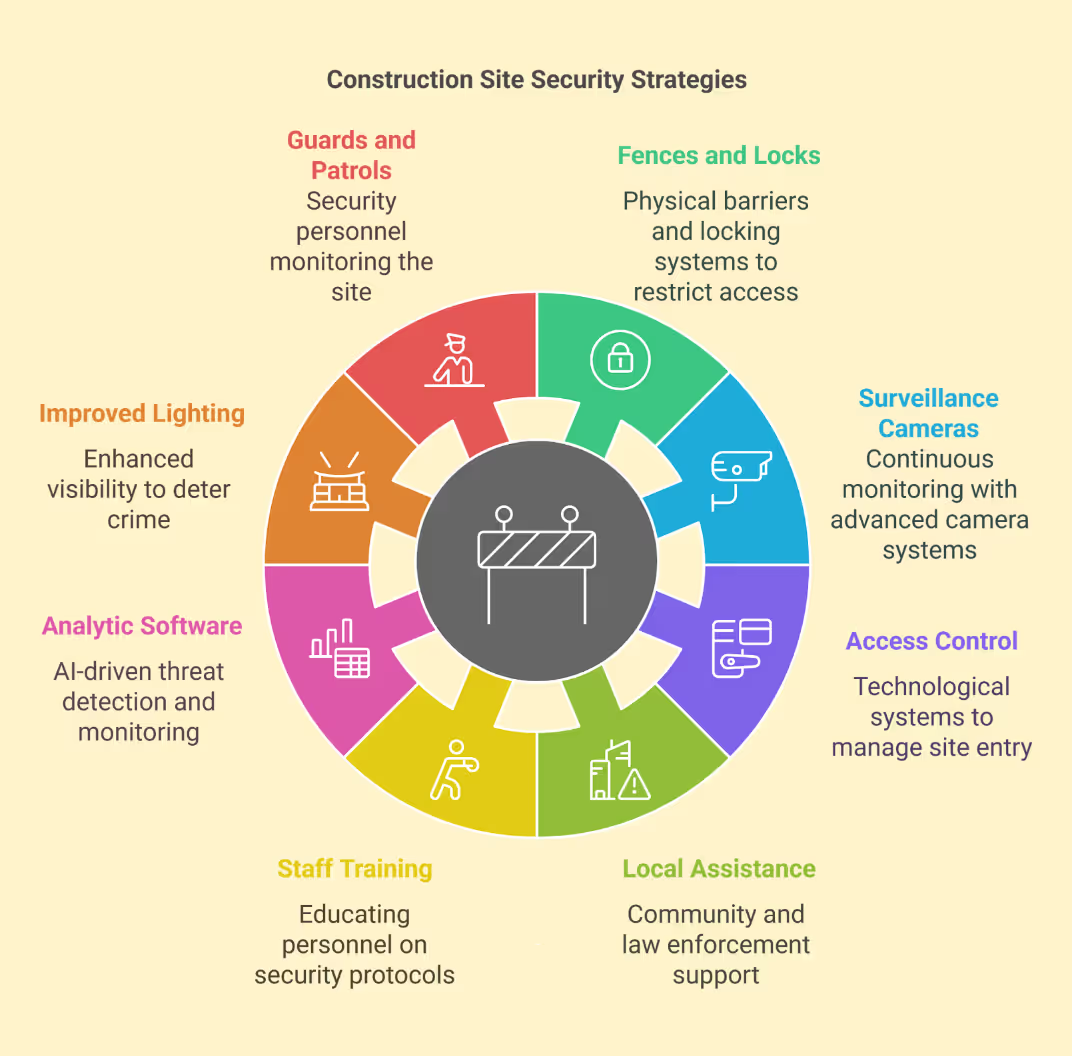
There are plenty of ways you can prevent damage, theft, and vandalism on your construction project site. Below are some helpful jumping-off points you can use in crafting a comprehensive security plan for your site security protocols.
Fences and Locks
Help limit access to your site with a solid fence, and lock entry points when not in use. Where possible, use an electronic lock system that's more difficult to break into. This tip may seem simple and obvious, but there's a reason a tall, solid, secure fence is a tried-and-true standby in security across industries.
Surveillance Cameras
Continuously monitoring cameras with smart analytics features and floodlights, such as those offered by LiveView Technologies, are your best bet in keeping your site safe, especially in the off-hours.
Marking, Tracking, and Keeping Inventory of Items
There are a few ways to protect your equipment from theft. One particularly effective method is to label equipment with identifiable markings, so they can be spotted and reported on if stolen. Then, invest in GPS tracking software for key equipment and machinery, and keep an inventory during day-to-day operations of equipment and its whereabouts.
Access Control and Alarms
Use technological systems to control and log entry into your construction site, and consider installing alarms that sound, alert you, and call emergency services when locks are broken and the site's perimeter is breached. Access control technology may use keycards, passcodes, or biometric recognition to allow entry, and can be modified to even further restrict access to more sensitive areas (i.e., where equipment and machinery are stored). Alarms can alert management of a security breach in the site's perimeter, or in the perimeter of other sensitive areas. LVT cameras can be fully integrated with these technologies, for a united security effort.
Help From the Locals
Enlist the help of local law enforcement and neighborhood watch programs. Ask them to help identify and report suspicious activity; communities want to protect the integrity of construction projects in their area, and will likely be supportive of your company and vigilant in looking out for suspicious happenings. Be proactive in promoting positive relationships with local citizens and leaders; this rapport will be beneficial not only to your project but to your company in the long run.
Maintaining Systems
Conduct regular audits of your site's security, and be on the lookout for new vulnerabilities, wear-and-tear in security equipment and fencing, and any other areas of concern. The more frequently you conduct these checks, the safer your site and its resources will be. Additionally, check in to make sure that safety protocols are being properly followed, and conduct updated employee training if needed.
Training Your Staff
As with any other aspect of business, your personnel are your best assets. Train your team thoroughly and effectively on safety protocols, and equip each team member with the knowledge and confidence to be able to spot, deter, and report suspicious activity.
In addition to basic security training, conduct regular emergency response drills with your employees and any other regulars on the site. Engage your team in educational drills for events such as vandalism, break-ins, and violence. This practice will go a long way in minimizing damage and your response time to an incident.
Analytic Software
You no longer have to rely on grainy footage that is only useful after the fact. Modern data analytics are a lifesaver for construction sites; often involving artificial intelligence and other motion detection services, analytic software pairs with your camera system, as well as access control, alarms, and other security systems to help monitor and identify threats, and differentiate them from benign distractors.
Improved Lighting
Another seeming no-brainer in the world of security is the power of a strong light source. Floodlights are a simple, yet effective method of security, both deterring crime and enhancing the effectiveness of the cameras that capture offenses.
Perimeter Security
As was mentioned before, a strong fence goes a long way in securing a site. Beyond a simple fence, however, there are other ways to increase the security of your site's perimeter. Surveillance cameras, motion detection technology, and physical deterrents (e.g., barbed wire, electrified fencing, etc.) can all be extremely effective in boosting perimeter security.
Guards and Patrols
For an added layer of security, hire private security to patrol your site during the off-hours. Guards are often effective at both deterring and detecting threats.
Construction Site Vandalism: Common Questions
What counts as vandalism on a construction site?
Any deliberate damage or defacement of property that is not theft: graffiti, broken windows, cut fencing, slashed tires, damaged finishes, tampering with equipment. It is distinct from theft in how it is charged and often in how it is covered, which is why an incident involving both should be documented as both.
Is construction site vandalism hard to prove?
Proving that damage occurred is straightforward. Identifying who did it is the hard part, and it usually comes down to whether there was usable footage of the incident. Low-resolution footage that shows something happened but not who did it is the most common reason a case goes nowhere.
Does insurance cover construction site vandalism?
Builder's-risk policies commonly cover vandalism, but terms, deductibles and notice deadlines vary widely, and some carriers require documented security measures. Check the specific policy rather than assuming, and report promptly: late notice is a frequent reason a valid claim is reduced.
How do you stop repeat vandalism at the same site?
Repeat incidents are usually a coverage problem rather than a bad-luck problem. The reliable combination is a secured perimeter, lighting where the incidents actually happen, monitored cameras that cover the approach rather than just the gate, and a response fast enough that someone is contacted while the person is still on site. Fast repair of visible damage matters more than it sounds like it should.
Partner With LVT
LiveView Technologies (LVT) is your solution for excellent, integrable security solutions. LVT® Units deploy on a site in under an hour, with no trenching and no network drop, and move as the work moves. Motion analytics separate a person from a passing animal, floodlights and audio escalate on the spot, and live feeds reach whoever is on call. For a site that exists for ninety days and then relocates, that is the difference between security that fits the project and security that fits a building. Easy to integrate with access control systems, alarm systems, and other security measures on your site, LVT cameras are your one-stop shop for peace of mind and decreased crime.
%20(1)%20(5)%20(1).avif)